
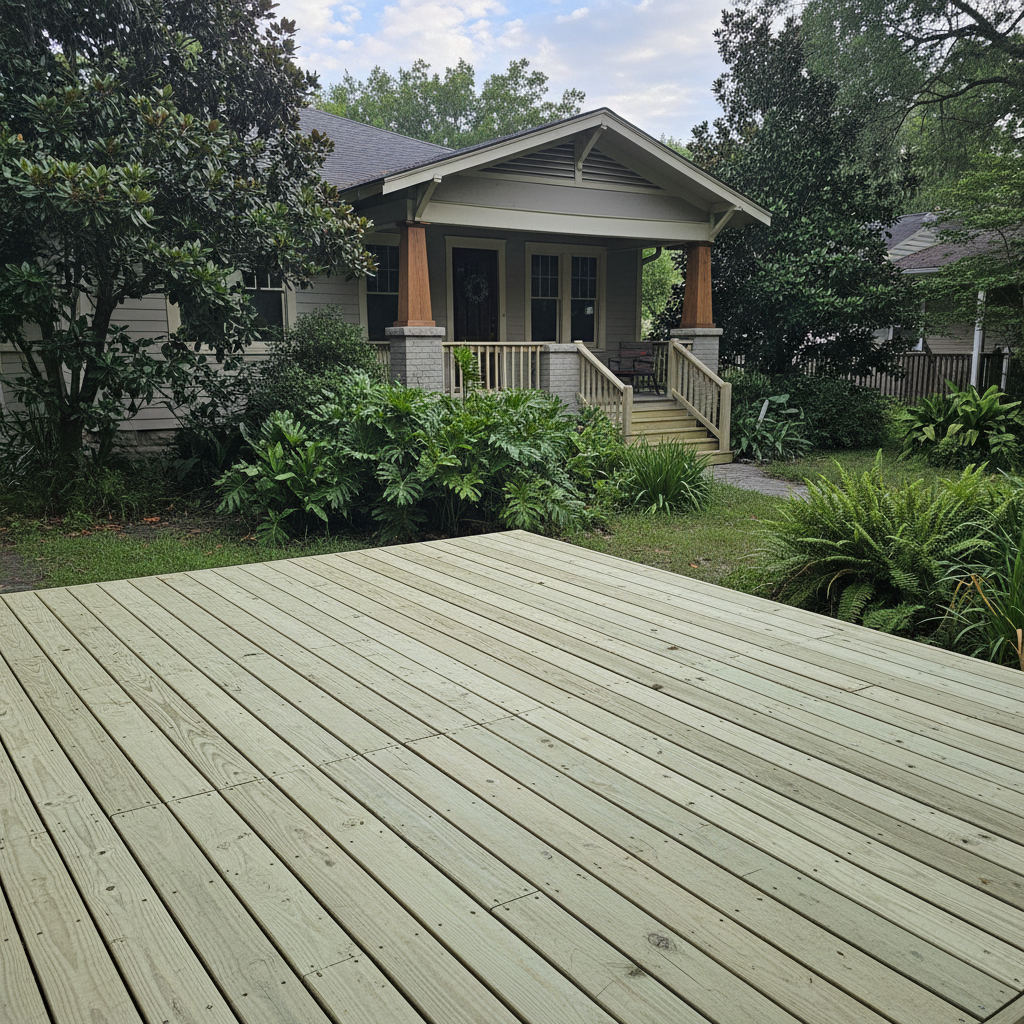
A deck in Biloxi doesn't live the same life as a deck in Ohio. It sits in salt air nine months out of the year, it takes a direct run of hurricane season from June through November, and a lot of the ground under it is sandy fill that drains fast but moves when it's saturated. Picking a builder here isn't just about who answers the phone first. It's about who understands what the coast does to lumber, fasteners, and footings over time.
What the ground and water are doing under the deck
Much of Biloxi sits low and close to the Sound or the back bays, and a lot of lots have sandy or silty soil with a water table that isn't far down, especially anywhere near Back Bay, Woolmarket, or the older Point Cadet streets. That changes how footings get built. A builder working here should be pouring concrete footings below the frost line, which in South Mississippi is shallow, but more importantly they should be sizing footings for bearing capacity in loose or sandy soil, not just copying a spec sheet from somewhere inland. On lower lots or anywhere near a flood zone, some builders use helical piles instead of poured footings because they can be driven to depth without fighting groundwater the whole time. If a contractor can't tell you how deep their footings go and why, that's a gap worth asking about before you sign anything.
A lot of Biloxi parcels sit in FEMA flood zone AE, and that affects more than insurance. It can set the base flood elevation your deck's lowest structural members have to clear, and it can mean skirting needs to be open lattice instead of solid panels so storm surge can pass through instead of pushing the whole structure off its posts. A builder who's done work here knows to check this before pricing the job, not after the footings are in the ground.
Permits, inspections, and what that actually buys you
Most elevated decks and anything attached to the house need a permit through the city of Biloxi, or Harrison County if you're outside city limits. The inspector is generally looking at footing depth and size before concrete goes in, then framing and ledger attachment, then a final once rails and stairs are up. A permit isn't paperwork for its own sake. It's a second set of eyes on the ledger flashing and the footing depth, which are the two things most likely to fail quietly over ten years. A builder who tells you permits aren't necessary for a deck, or who offers to skip it to save time, is asking you to be the only inspection this project ever gets.
HOAs aren't universal here the way they are in some newer coastal towns, but you'll run into them in some of the newer subdivisions in D'Iberville and parts of Ocean Springs nearby. If you're in one, get the deck design approved before material shows up, not after.
Materials and fasteners that actually hold up here
Humidity and salt air are hard on hardware. Modern pressure-treated lumber uses copper-based preservatives (ACQ or MCA), and copper reacts with plain galvanized steel. Over a few years that combination can corrode joist hangers and nails faster than people expect, especially this close to the water. A builder who's doing it right specs stainless steel fasteners, or at minimum hot-dip galvanized hardware rated G185, not the cheaper mill-galvanized stuff. Ask what fastener spec is in the contract. If the answer is vague, that's your answer.
On lumber versus composite: pressure-treated pine is cheaper up front but it moves, it checks, and in this climate it needs staining or sealing roughly every two to three years to keep water out of the grain, sooner if it's facing full afternoon sun. Composite costs more initially but doesn't need that maintenance cycle, which matters if you don't want to be out there with a pump sprayer every other summer. Either material needs a gap of about an eighth of an inch between boards for wood, with composite spacing set by the manufacturer's own spec since brands vary. A deck board laid tight against its neighbor in July will have nowhere to go when it swells, and it'll cup or buckle within a season.
The ledger board, where the deck bolts into the house, is where most slow failures start. It needs flashing, usually a self-adhering membrane behind and over it, so water running off the house doesn't sit against the band joist and rot it from the inside. You can't see this after the siding goes back on, which is exactly why it has to be done right the first time and inspected before it's covered up.
What's different about older streets versus newer subdivisions
A lot of Biloxi's older housing stock was built mid-century and then rebuilt or repaired after Katrina in 2005, so you'll find a mix of slab homes and pier-and-beam, sometimes both on the same street. A deck on an older pier-and-beam house often means tying into framing that's shifted a little over sixty-plus years, and a builder has to check that before assuming the house side of the connection is square and solid. Newer subdivisions, especially further north toward Woolmarket or out toward D'Iberville, tend to have more consistent slab construction and simpler ledger attachment, but they can also have stricter setback rules and HOA design review to work through first.
What to walk away from
- No written contract specifying footing depth, fastener type, and board spacing. A verbal "we'll do it right" isn't a spec.
- No mention of flood zone or base flood elevation if your lot is near the water. That's not optional information down here.
- A quote well below everyone else's with no explanation. Usually it means smaller footings, cheaper fasteners, or no permit pulled.
- No proof of insurance. If a worker gets hurt on your property and the contractor isn't covered, that liability can land on you.
- Reluctance to pull a permit or get an inspection scheduled. That's someone who doesn't want a second opinion on their own footings.
A deck is one of the few home projects that's outside, exposed, and load-bearing at the same time, which means the mistakes don't stay hidden for long on the Gulf Coast. We've built and repaired enough decks around Biloxi to know which details matter here and which ones are copied from a climate that isn't this one. If you want a second set of eyes on a quote, or you're starting from scratch, take a look at Ashford Deck Co and what we build.